| Ver tema anterior :: Ver tema siguiente |
| Autor |
Mensaje |
simple.joy 

Registrado: 30 Mayo 2022
Mensajes: 954
|
 Publicado: Mar Dic 12, 2023 2:44 pm Asunto: Konishiroku Hexanon 50 mm f/2.8 (enlarging lens) |
|
Publicado: Mar Dic 12, 2023 2:44 pm Asunto: Konishiroku Hexanon 50 mm f/2.8 (enlarging lens) |
|
|
simple.joy wrote:
Because of some conversations I had recently (some on the subject of beautiful bokeh, which is no coincidence...), I was reminded of a lens I've tried to find some information one, but ultimate wasn't able to find very much in terms of facts.
The lens I'm talking about is a
Konishiroku Hexanon 50 mm f/2.8 enlarging lens

and among the most beautiful lenses I've ever seen for my personal taste. (I'm a simple man, so perhaps that's why I like simple designs...)
It's a really compact lens in a metal enlarging lens housing, and while the similar Hexar variants - in 50 and 75 mm and with f/3.5 and f/4.5 apertures - aren't uncommon, I've only seen this particular lens two times during the last couple of years, so it seems to be quite rare. It does look very similar (or could be identical) to a Hexanon 50 mm f/2.8, which was featured on the Konica I camera:

https://flic.kr/p/8kZJCo
When I first encountered that similarity, I assumed that my sample might just have been such a Hexanon lens planted into a Hexar enlarging lens mount... but then it dawned on me that none of those lenses goes to f/2.8 and at least the metal mounting mechanism would have to be custom made. That's why I'm not sure about that anymore.
Upon further searching I found the following information on the camera-wiki:
"Hexar 50mm f/3.5 enlarging lens, modified for the Chiyoca
The Hexar 50mm f/3.5 found on the viewfinder-only Chiyoca model is a modified enlarging lens: the maker of the Chiyoca obtained various Hexar enlarging lenses and mounted them on a focusing helix they made themselves. It is not known if this was made with the approval of Konishiroku or in a purely unofficial way. In any case, the Konishiroku company was not aggrieved, and later supplied official Hexar and Hexanon lenses for the Chiyotax."
(http://camera-wiki.org/wiki/Konishiroku_lenses_in_Leica_screw_mount)
I have no idea if the lenses mentioned there look like the one I have, but at least there's some mention of a Hexanon lens.
Whatever its origin is, I really love the rendering of this lens. It's not particularly sharp at f/2.8, but decent enough and has a wonderful look. I think it features a 5 elements in 3 groups (Heliar?) design and has a beautiful aperture mechanism with 9 rounded blades. Here are some sample shots taken with that lens (most of them wide open):
 Time to rain in his ambition… by simple.joy, on Flickr
 Come closer… aren‘t you known for macros? by simple.joy, on Flickr
 In the twine-light by simple.joy, on Flickr
 Love is all around by simple.joy, on Flickr
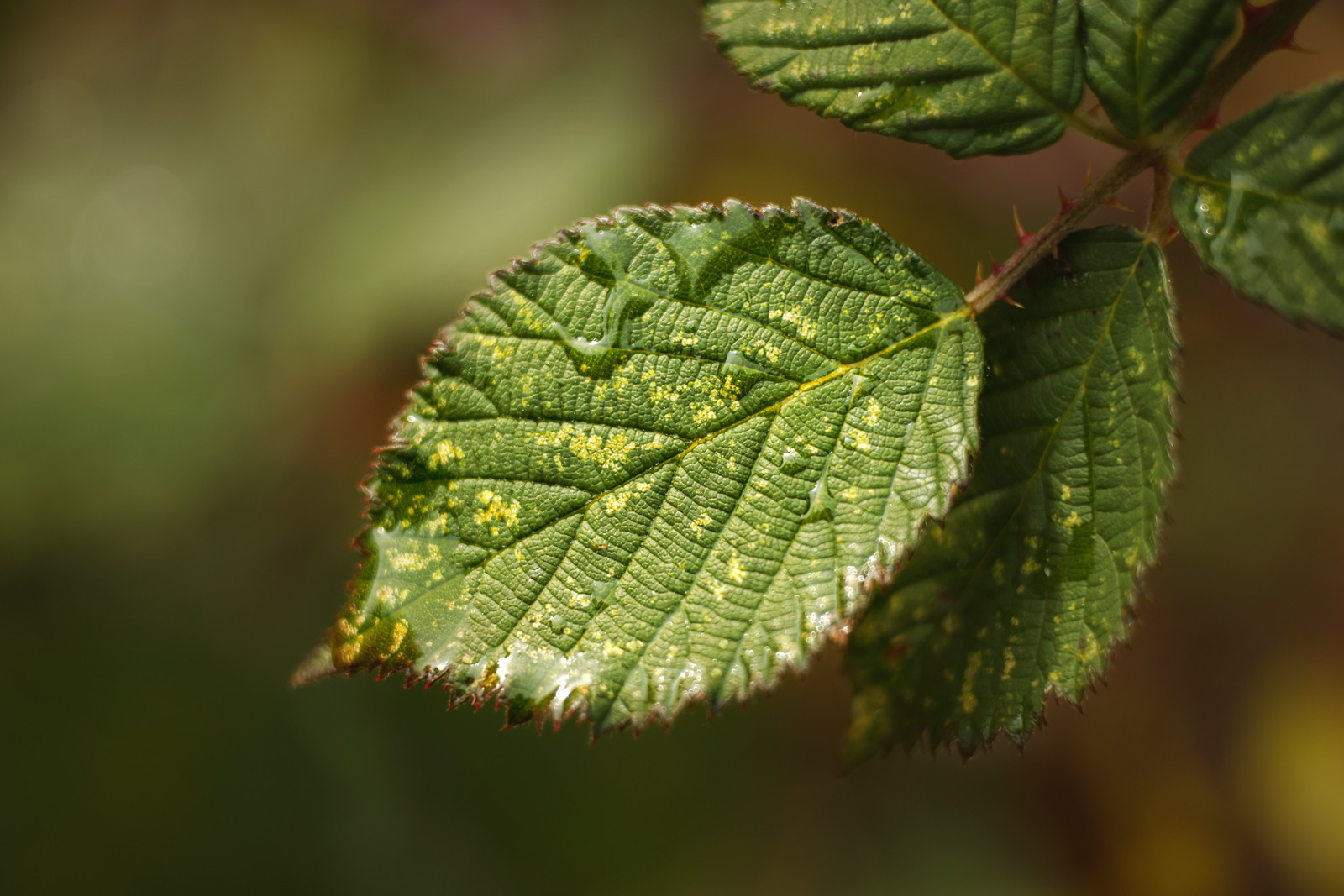 Contextural by simple.joy, on Flickr
 Uniquely qualified by simple.joy, on Flickr
 A tool at the wheel... by simple.joy, on Flickr
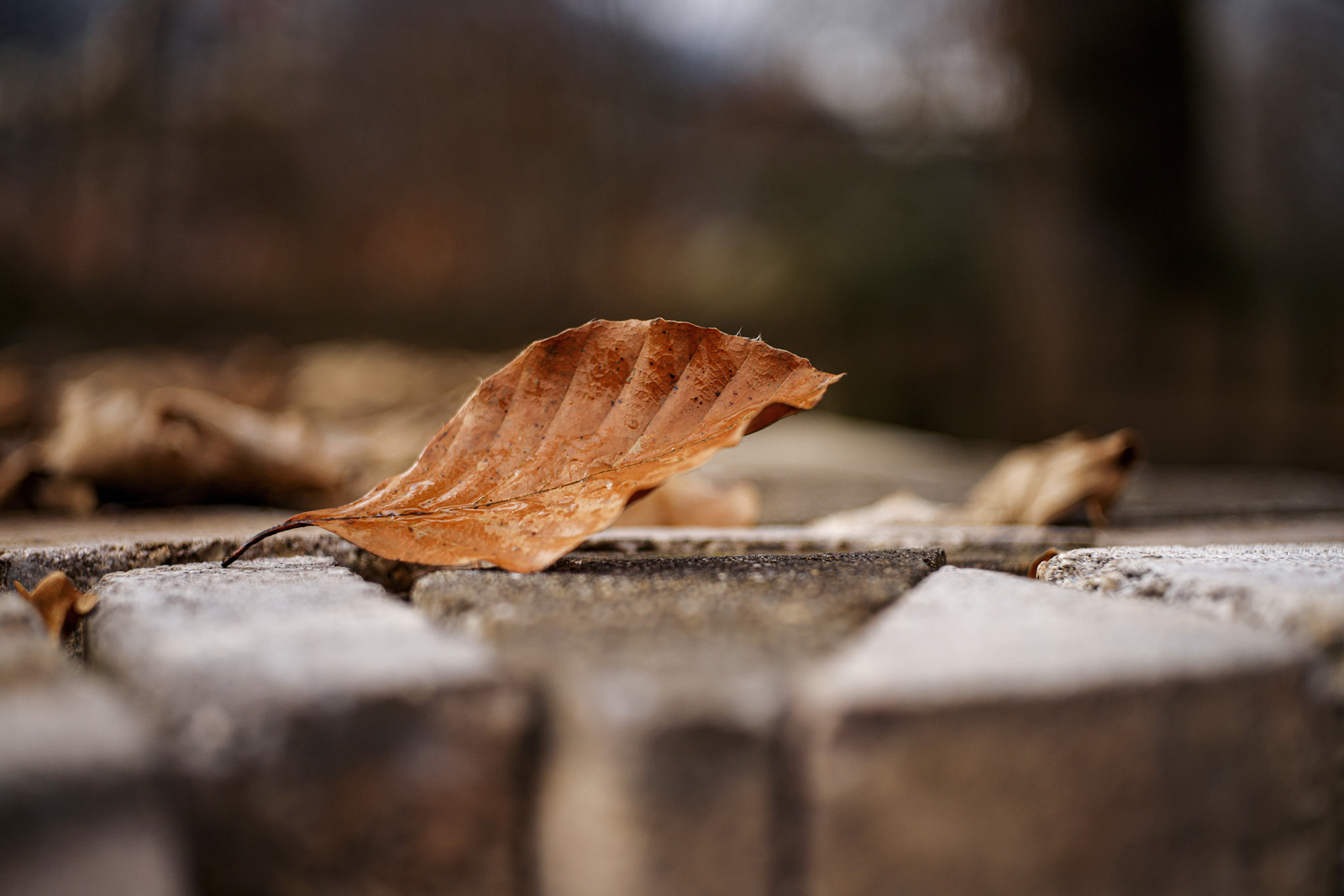 Ready for take off... by simple.joy, on Flickr
If you know anything about the possible origin of this lens or have seen a similarly unusual variant, I'd really appreciate any information.
_________________
---
Manual lens enthusiast
https://www.flickr.com/photos/simple_joy/ |
|
| Volver arriba |
|
 |
calvin83


Registrado: 12 Abr 2009
Mensajes: 7740
Ubicación: Hong Kong
|
Publicado: Mar Dic 12, 2023 2:51 pm Asunto: |
|
Publicado: Mar Dic 12, 2023 2:51 pm Asunto: |
|
|
calvin83 wrote:
 
I have a copy of the 75mm f/3.5 which i believed is the same lens used in the Konica Pearl. Pretty good lens i would say.
_________________
The best lens is the one you have with you.
https://lensfever.com/
https://www.instagram.com/_lens_fever/ |
|
| Volver arriba |
|
|
caspert79

Registrado: 31 Oct 2010
Mensajes: 3916
Ubicación: The Netherlands
|
Publicado: Mar Dic 12, 2023 4:20 pm Asunto: |
|
Publicado: Mar Dic 12, 2023 4:20 pm Asunto: |
|
|
caspert79 wrote:
Great results, and yes, the lens looks beautiful! |
|
| Volver arriba |
|
|
blotafton

Registrado: 08 Ago 2013
Mensajes: 1794
Ubicación: Sweden
|
Publicado: Mar Dic 12, 2023 4:46 pm Asunto: |
|
Publicado: Mar Dic 12, 2023 4:46 pm Asunto: |
|
|
blotafton wrote:
Nice rendering |
|
| Volver arriba |
|
|
lumens pixel
Registrado: 27 Feb 2019
Mensajes: 1128
Expire: 2021-06-25
|
Publicado: Mar Dic 12, 2023 4:58 pm Asunto: |
|
Publicado: Mar Dic 12, 2023 4:58 pm Asunto: |
|
|
lumens pixel wrote:
All these look very nice. This lens deserves to be used quite often. And it is in very good hands.
_________________
Lumens Pixel
-------------
Minolta SR mount: 16 2,8; Sigma SuperWide 24 2,8; 28 2,5; 28 2,8; 28 3,5; 35 2,8; 45 2,0; 50 1,4; 50 1,7; 50 2,0; 58 1,4; 85 2,0; 100 2,5; 100 4 Macro; 135 3,5; 135 2,8; 200 4; RF 250 5,6; 24-35 3,5; 35-70 3,5; 75-150 4; 70-210 4
Canon FD mount: Tokina RMC 17 3,5; 28 2,8; 35 2,8; 50 1,8; 50 3,5 Macro; 55 1,2; 135 3,5; 135 2,5; 200 4,0; 300 5,6; 28-55 3,5 4,5; Tokina SZ-X SD 270; 70-150 4,5; 70-210 f4; 80-200 4L; Tokina SZ-X 845
Tamron Adaptall: 28-80 3,5-4,2 (27A); 70-210 3,8-4 (46A); 60-300 (23A); 90 2,5 (52B); 35-135 3,5-4,5 (40A)
Tamron SP: 20-40 2,7-3,5 (266D) |
|
| Volver arriba |
|
|
Ernst Dinkla

Registrado: 30 Nov 2016
Mensajes: 499
|
Publicado: Mié Dic 13, 2023 4:19 pm Asunto: Re: Konishiroku Hexanon 50 mm f/2.8 (enlarging lens) |
|
Publicado: Mié Dic 13, 2023 4:19 pm Asunto: Re: Konishiroku Hexanon 50 mm f/2.8 (enlarging lens) |
|
|
Ernst Dinkla wrote:
| simple.joy escribió: |
Because of some conversations I had recently (some on the subject of beautiful bokeh, which is no coincidence...), I was reminded of a lens I've tried to find some information one, but ultimate wasn't able to find very much in terms of facts.
The lens I'm talking about is a
Konishiroku Hexanon 50 mm f/2.8 enlarging lens
It's a really compact lens in a metal enlarging lens housing, and while the similar Hexar variants - in 50 and 75 mm and with f/3.5 and f/4.5 apertures - aren't uncommon, I've only seen this particular lens two times during the last couple of years, so it seems to be quite rare. It does look very similar (or could be identical) to a Hexanon 50 mm f/2.8, which was featured on the Konica I camera:
When I first encountered that similarity, I assumed that my sample might just have been such a Hexanon lens planted into a Hexar enlarging lens mount... but then it dawned on me that none of those lenses goes to f/2.8 and at least the metal mounting mechanism would have to be custom made. That's why I'm not sure about that anymore.
I have no idea if the lenses mentioned there look like the one I have, but at least there's some mention of a Hexanon lens.
Whatever its origin is, I really love the rendering of this lens. It's not particularly sharp at f/2.8, but decent enough and has a wonderful look. I think it features a 5 elements in 3 groups (Heliar?) design and has a beautiful aperture mechanism with 9 rounded blades. Here are some sample shots taken with that lens (most of them wide open):
If you know anything about the possible origin of this lens or have seen a similarly unusual variant, I'd really appreciate any information. |
In that period Xenotar and Super Xenar type lenses of 45 or 50mm 2.8 were not rare in fixed lenses for 35 rangefinder cameras and an exchangeable one with a Xenotar design appeared also (Canon 50mm 2.5 for example). 4/5 G/E for both types. Brands: Canon, Fujica, Yashica. The first Canonet 45mm 1.9, the Fujica 35 M and 35 ML, Yashica 35 and 35 YL, all Xenotar types.
_________________
Met vriendelijke groet, Ernst
No photographer's gear list is complete without the printer mentioned ! |
|
| Volver arriba |
|
|
simple.joy
Registrado: 30 Mayo 2022
Mensajes: 954
|
Publicado: Mié Dic 13, 2023 5:33 pm Asunto: |
|
Publicado: Mié Dic 13, 2023 5:33 pm Asunto: |
|
|
simple.joy wrote:
| calvin83 escribió: |
I have a copy of the 75mm f/3.5 which i believed is the same lens used in the Konica Pearl. Pretty good lens i would say. |
Oh yes, that one should be very good as well. I have the f/4.5 version only.
| caspert79 escribió: |
| Great results, and yes, the lens looks beautiful! |
Thank you very much!
| blotafton escribió: |
| Nice rendering |
Thanks - still got to try it in a couple of different situations.
| lumens pixel escribió: |
| All these look very nice. This lens deserves to be used quite often. And it is in very good hands. |
That's very kind - many thanks!
| Ernst Dinkla escribió: |
In that period Xenotar and Super Xenar type lenses of 45 or 50mm 2.8 were not rare in fixed lenses for 35 rangefinder cameras and an exchangeable one with a Xenotar design appeared also (Canon 50mm 2.5 for example). 4/5 G/E for both types. Brands: Canon, Fujica, Yashica. The first Canonet 45mm 1.9, the Fujica 35 M and 35 ML, Yashica 35 and 35 YL, all Xenotar types. |
That's very interesting - thanks a lot! I've looked up the Xenotar and Super Xenar designs to boost my memories in which ways they differ... none of those does seem to match the Hexanon 50/2.8 though. From the reflections I'm pretty sure that it features 5 elements in 3 groups (2 doublets and 1 single element). I'm not sure about the sequence of the lenses on the front of the lens, but I can perhaps compare it to a Heliar of similar focal length to confirm... just got to think which one would fit the bill. I have several Xenotar lenses in that focal length around and they don't look similar.
_________________
---
Manual lens enthusiast
https://www.flickr.com/photos/simple_joy/ |
|
| Volver arriba |
|
|
stevemark
Registrado: 29 Abr 2011
Mensajes: 5511
Ubicación: Switzerland
|
Publicado: Mié Dic 13, 2023 6:31 pm Asunto: |
|
Publicado: Mié Dic 13, 2023 6:31 pm Asunto: |
|
|
stevemark wrote:
| simple.joy escribió: |
That's very interesting - thanks a lot! I've looked up the Xenotar and Super Xenar designs to boost my memories in which ways they differ... none of those does seem to match the Hexanon 50/2.8 though. From the reflections I'm pretty sure that it features 5 elements in 3 groups (2 doublets and 1 single element). I'm not sure about the sequence of the lenses on the front of the lens, but I can perhaps compare it to a Heliar of similar focal length to confirm... just got to think which one would fit the bill. I have several Xenotar lenses in that focal length around and they don't look similar. |
Could be also a Super-Rokkor structure: In front a positive cemented triplet (= 4 reflections), and behind the aperture two single lenses (a negative and a positive, 2 reflections each). This results in the same total number of reflections as in your postulated case (2 doublets and 1 single element = totally 8 reflections), but nubler of reflexes before/after the aperture would be different.
S
_________________
www.artaphot.ch |
|
| Volver arriba |
|
|
Baekmann

Registrado: 28 Feb 2021
Mensajes: 93
|
Publicado: Mié Dic 13, 2023 6:33 pm Asunto: |
|
Publicado: Mié Dic 13, 2023 6:33 pm Asunto: |
|
|
Baekmann wrote:
Wow, very impressive!
_________________
www.youtube.com/ohjajohh |
|
| Volver arriba |
|
|
simple.joy
Registrado: 30 Mayo 2022
Mensajes: 954
|
Publicado: Mié Dic 13, 2023 11:29 pm Asunto: |
|
Publicado: Mié Dic 13, 2023 11:29 pm Asunto: |
|
|
simple.joy wrote:
| stevemark escribió: |
| simple.joy escribió: |
That's very interesting - thanks a lot! I've looked up the Xenotar and Super Xenar designs to boost my memories in which ways they differ... none of those does seem to match the Hexanon 50/2.8 though. From the reflections I'm pretty sure that it features 5 elements in 3 groups (2 doublets and 1 single element). I'm not sure about the sequence of the lenses on the front of the lens, but I can perhaps compare it to a Heliar of similar focal length to confirm... just got to think which one would fit the bill. I have several Xenotar lenses in that focal length around and they don't look similar. |
Could be also a Super-Rokkor structure: In front a positive cemented triplet (= 4 reflections), and behind the aperture two single lenses (a negative and a positive, 2 reflections each). This results in the same total number of reflections as in your postulated case (2 doublets and 1 single element = totally 8 reflections), but nubler of reflexes before/after the aperture would be different.
S |
You're right - thanks for that suggestions, I've not thought about a design like that having the same numbers of reflections. I'm pretty sure there's a cemented doublet at the rear of the lens though, making a Heliar the most likely variant. Is there even a lens design with two doublets and a single lens in front of them?
| Baekmann escribió: |
| Wow, very impressive! |
Thank you very much!
Here are a couple more shots:
 Petall-encompassing by simple.joy, on Flickr
 Colorful kiss by simple.joy, on Flickr
 Spiding in plain sight by simple.joy, on Flickr
 Out of the blue… a veiled thread by simple.joy, on Flickr
_________________
---
Manual lens enthusiast
https://www.flickr.com/photos/simple_joy/ |
|
| Volver arriba |
|
|
stevemark
Registrado: 29 Abr 2011
Mensajes: 5511
Ubicación: Switzerland
|
Publicado: Mié Dic 13, 2023 11:54 pm Asunto: |
|
Publicado: Mié Dic 13, 2023 11:54 pm Asunto: |
|
|
stevemark wrote:
| simple.joy escribió: |
You're right - thanks for that suggestions, I've not thought about a design like that having the same numbers of reflections. I'm pretty sure there's a cemented doublet at the rear of the lens though, making a Heliar the most likely variant. Is there even a lens design with two doublets and a single lens in front of them?
|
You can easily check that while the aperture is completely closed. Three reflections behind the aperture would mean a doublet (e. g. in Heliar), four reflexions behind the aperture would mean two single lenses (like in the Super Rokkor). Or a cemented triplet like in the 1.5/5cm Sonnars, but pretty unlikely.
S
_________________
www.artaphot.ch |
|
| Volver arriba |
|
|
simple.joy
Registrado: 30 Mayo 2022
Mensajes: 954
|
Publicado: Vie Dic 15, 2023 12:57 pm Asunto: |
|
Publicado: Vie Dic 15, 2023 12:57 pm Asunto: |
|
|
simple.joy wrote:
| stevemark escribió: |
| simple.joy escribió: |
You're right - thanks for that suggestions, I've not thought about a design like that having the same numbers of reflections. I'm pretty sure there's a cemented doublet at the rear of the lens though, making a Heliar the most likely variant. Is there even a lens design with two doublets and a single lens in front of them?
|
You can easily check that while the aperture is completely closed. Three reflections behind the aperture would mean a doublet (e. g. in Heliar), four reflexions behind the aperture would mean two single lenses (like in the Super Rokkor). Or a cemented triplet like in the 1.5/5cm Sonnars, but pretty unlikely.
S |
Thanks! Yes it seems to be a Heliar.
 Take a bow-keh by simple.joy, on Flickr
_________________
---
Manual lens enthusiast
https://www.flickr.com/photos/simple_joy/ |
|
| Volver arriba |
|
|
|
|
|
No puedes publicar temas nuevos en este foro
No puedes responder a temas en este foro
No puedes editar tus mensajes en este foro
No puedes borrar tus mensajes en este foro
No puedes votar en las encuestas de este foro
|
 Español
 中文
 Magyar
 Русский
 Deutsch
 日本語
 Français



