| Ver tema anterior :: Ver tema siguiente |
| Autor |
Mensaje |
Slalom 


Registrado: 10 Dic 2017
Mensajes: 184
Ubicación: Stourbridge
|
 Publicado: Jue Abr 27, 2023 3:33 pm Asunto: Efficient lens storage |
|
Publicado: Jue Abr 27, 2023 3:33 pm Asunto: Efficient lens storage |
|
|
Slalom wrote:
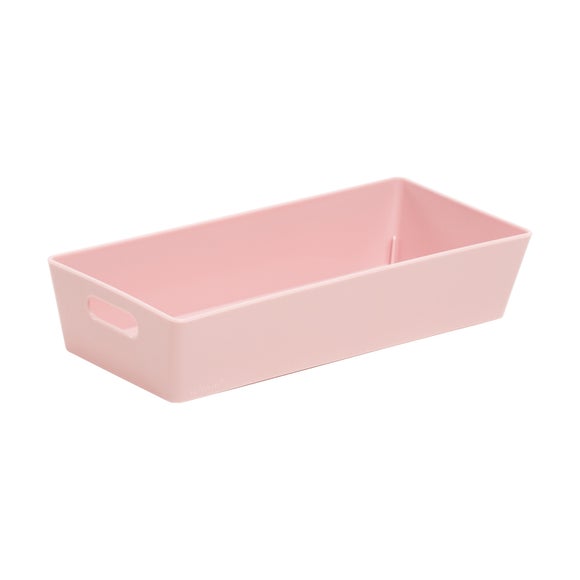
I found these trays fit a Ikea Billy bookcase well:
Wham Versatile Plastic Rectangular Studio Basket 2.01.
I can stand three lenses upright in each tray, and seven across a book case, adjust the shelves for hieght and lenses seem to disappear. With glazed doors on the bookcase you can work out where to start looking before opening the door. The trays also seem amenable to stickers, so label any set of three. |
|
| Volver arriba |
|
 |
visualopsins


Registrado: 05 Mar 2009
Mensajes: 11698
Ubicación: California
Expire: 2027-07-11
|
Publicado: Dom Sep 03, 2023 11:39 pm Asunto: |
|
Publicado: Dom Sep 03, 2023 11:39 pm Asunto: |
|
|
visualopsins wrote:
 Store 126 lenses per bookcase!
IKEA Billy Bookcase
https://www.ikea.com/us/en/p/billy-bookcase-white-00263850/

Wham Versatile Plastic Rectangular Studio Basket 2.01 W 11cm x L 25cm x H 5cm (4" x 10" x 2")
https://www.dunelm.com/product/wham-studio-plastic-storage-basket-201-1000152841
_________________
☮☮☮☮☮☮☮☮☮☮☮☮☮☮☮☮☮☮☮☮☮☮☮☮☮☮☮☮☮☮☮☮ like attracts like! ☮☮☮☮☮☮☮☮☮☮☮☮☮☮☮☮☮☮☮☮☮☮☮☮☮☮☮☮☮☮☮☮
Cameras: Sony ILCE-7RM2, Spotmatics II, F, and ESII, Nikon P4
Lenses:
M42 Asahi Optical Co., Takumar 1:4 f=35mm, 1:2 f=58mm (Sonnar), 1:2.4 f=58mm (Heliar), 1:2.2 f=55mm (Gaussian), 1:2.8 f=105mm (Model I), 1:2.8/105 (Model II), 1:5.6/200, Tele-Takumar 1:5.6/200, 1:6.3/300, Macro-Takumar 1:4/50, Auto-Takumar 1:2.3 f=35, 1:1.8 f=55mm, 1:2.2 f=55mm, Super-TAKUMAR 1:3.5/28 (fat), 1:2/35 (Fat), 1:1.4/50 (8-element), Super-Multi-Coated Fisheye-TAKUMAR 1:4/17, Super-Multi-Coated TAKUMAR 1:4.5/20, 1:3.5/24, 1:3.5/28, 1:2/35, 1:3.5/35, 1:1.8/85, 1:1.9/85 1:2.8/105, 1:3.5/135, 1:2.5/135 (II), 1:4/150, 1:4/200, 1:4/300, 1:4.5/500, Super-Multi-Coated Macro-TAKUMAR 1:4/50, 1:4/100, Super-Multi-Coated Bellows-TAKUMAR 1:4/100, SMC TAKUMAR 1:1.4/50, 1:1.8/55
M42 Carl Zeiss Jena Flektogon 2.4/35
Contax Carl Zeiss Vario-Sonnar T* 28-70mm F3.5-4.5
Pentax K-mount SMC PENTAX-A ZOOM 1:3.5 35~105mm, SMC PENTAX ZOOM 1:4 45~125mm
Nikon Micro-NIKKOR-P-C Auto 1:3.5 f=55mm, NIKKOR-P Auto 105mm f/2.5 Pre-AI (Sonnar), Micro-NIKKOR 105mm 1:4 AI, NIKKOR AI-S 35-135mm f/3,5-4,5
Solinon 1:5.6/18 ASPH.
Tamron SP 17mm f/3.5 (51B), Tamron SP 17mm f/3.5 (151B), SP 500mm f/8 (55BB), SP 70-210mm f/3.5 (19AH)
Vivitar 100mm 1:2.8 MC 1:1 Macro Telephoto (Kiron)
|
|
| Volver arriba |
|
|
Alun Thomas

Registrado: 20 Ago 2018
Mensajes: 801
Ubicación: New Zealand
|
Publicado: Dom Sep 03, 2023 11:58 pm Asunto: |
|
Publicado: Dom Sep 03, 2023 11:58 pm Asunto: |
|
|
Alun Thomas wrote:
I keep all mine in sealed containers with dessicant that I regularly redry to keep them effective after sometimes frequent air changes during opening. However, I also have a bunch of cameras on display. I was, and still am, a little worried about fungus growth or haze development. However, for fungus I think the fact that they are exposed to light daily is probably beneficial. For SLR lenses I make sure the aperture is fully open to ensure maximal entry for light. For leaf shutter cameras I open the camera back to make sure a little light gets to the other half of the lens. So far it's been two years with no significant problems. My place in New Zealand has humid conditions, but not high heat.
Having just moved to somewhere far far warmer with even higher levels of humidity (~37 degrees C, >90% many days) I am again quite apprehensive and will need to monitor my lenses. |
|
| Volver arriba |
|
|
eggplant

Registrado: 27 Mayo 2020
Mensajes: 517
|
Publicado: Lun Sep 04, 2023 9:29 am Asunto: |
|
Publicado: Lun Sep 04, 2023 9:29 am Asunto: |
|
|
eggplant wrote:
Perhaps I need to investigate being more proactive with silica gel. It's not like I don't have any - I have a tub of self-indicating stuff - but I am just lucky to live somewhere not particularly humid. Most of my stuff is wrapped to just protect against dust.
The handful of lenses I use irregularly are out on my desk, capped. But I shoot infrequently enough that come a need for a particular one e.g. long FL, I'd have to 'unwrap' it.
_________________
UK |
|
| Volver arriba |
|
|
RokkorDoctor

Registrado: 27 Nov 2021
Mensajes: 1562
Ubicación: Kent, UK
Expire: 2025-05-01
|
Publicado: Lun Sep 04, 2023 10:23 am Asunto: |
|
Publicado: Lun Sep 04, 2023 10:23 am Asunto: |
|
|
RokkorDoctor wrote:
| eggplant escribió: |
Perhaps I need to investigate being more proactive with silica gel. It's not like I don't have any - I have a tub of self-indicating stuff - but I am just lucky to live somewhere not particularly humid. Most of my stuff is wrapped to just protect against dust.
The handful of lenses I use irregularly are out on my desk, capped. But I shoot infrequently enough that come a need for a particular one e.g. long FL, I'd have to 'unwrap' it. |
You may not have need for humiditiy control depending on your local climate and storage conditions. Just buy a humidity monitor and keep an eye on it; you don't want more than 5 consecutive days or so of RH levels above 70%(~ish); that's when fungal spores start to germinate and dormant fungus starts to regrow.
Since you keep your irregularly used lenses on your desk you don't have to worry about boxes and cases getting very damp inside.
The killer time is when there have been modestly humid warm days (but not humid enough to worry about RH & lenses), and then suddenly the temperature drops.
Here in the UK that is typically autumn time; that's when the RH in poorly ventilated boxes, cases, and cupboards shoots up to the 75%-80% levels, and outdoor RH levels reach well over 90%.
During the onset of winter much depends on how early in the winter season you turn on the heating; once frost sets in both outdoor and (properly ventilated!) indoor RH levels drop very low.
_________________
Mark
SONY A7S, A7RII + dust-sealed modded Novoflex/Fotodiox/Rayqual MD-NEX adapters
Minolta SR-1, SRT-101/303, XD7/XD11, XGM, X700
Bronica SQAi
Ricoh GX100
Minolta majority of all Rokkor SR/AR/MC/MD models made
Sigma 14mm/3.5 for SR mount
Tamron SP 60B 300mm/2.8 (Adaptall)
Samyang T-S 24mm/3.5 (Nikon mount, DIY converted to SR mount)
Schneider-Kreuznach PC-Super-Angulon 28mm/2.8 (SR mount)
Bronica PS 35/40/50/65/80/110/135/150/180/200/250mm |
|
| Volver arriba |
|
|
Paulius


Registrado: 25 Nov 2014
Mensajes: 330
Ubicación: Connecticut
|
Publicado: Mié Sep 06, 2023 1:15 pm Asunto: |
|
Publicado: Mié Sep 06, 2023 1:15 pm Asunto: |
|
|
Paulius wrote:
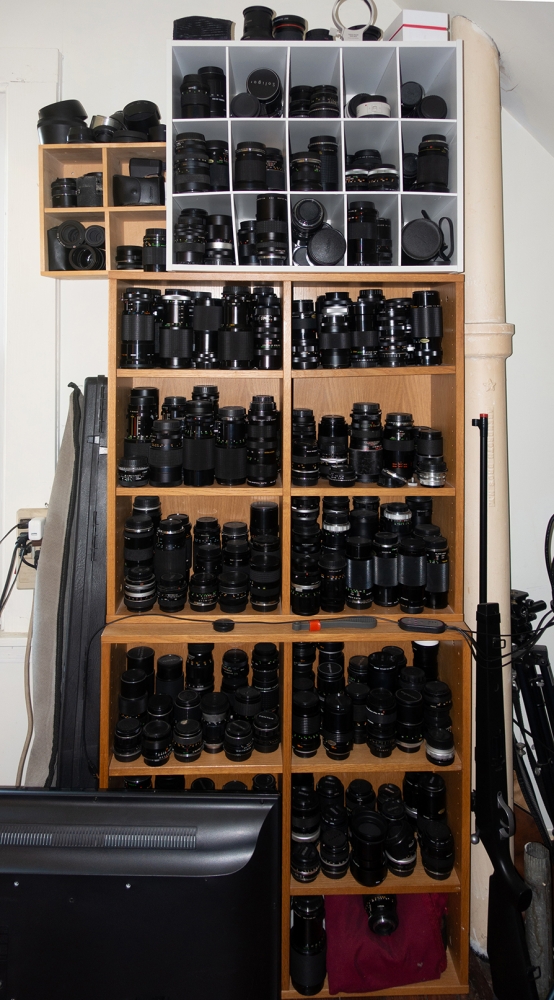
My 2 book shells like this contains about 150 lenses.
 |
|
| Volver arriba |
|
|
|
|
|
No puedes publicar temas nuevos en este foro
No puedes responder a temas en este foro
No puedes editar tus mensajes en este foro
No puedes borrar tus mensajes en este foro
No puedes votar en las encuestas de este foro
|
 Español
 中文
 Magyar
 Русский
 Deutsch
 日本語
 Français


