| Ver tema anterior :: Ver tema siguiente |
| Autor |
Mensaje |
Pancolart 


Registrado: 04 Feb 2008
Mensajes: 3710
Ubicación: Slovenia, EU
Expire: 2013-11-18
|
 Publicado: Mié Mar 29, 2023 3:25 pm Asunto: FF Zoom to Medium Format Prime Conversion |
|
Publicado: Mié Mar 29, 2023 3:25 pm Asunto: FF Zoom to Medium Format Prime Conversion |
|
|
Pancolart wrote:
No, i don't have a recipe but i know some of you study and understand lens designs thus asking:
would it be possible? Which elements to remove?
_________________
---------------------------------
The Peculiar Apparatus Of Victorian Steampunk Photography: 100+ Genuine Steampunk Camera Designs https://www.amazon.com/dp/B0B92829NS |
|
| Volver arriba |
|
 |
kathala


Registrado: 13 Mayo 2022
Mensajes: 164
|
Publicado: Mié Mar 29, 2023 5:28 pm Asunto: |
|
Publicado: Mié Mar 29, 2023 5:28 pm Asunto: |
|
|
kathala wrote:
don't remove elements! leave your lenses alone 
someone tried to sell a nikon 35/.9 - but the rear element was sawn off. miraculously, the lens would now cover much more. but it's no longer an f/.9. and it's no longer worth anything, either.
have a look at which lenses cover more than FF already:
docs.google.com/spreadsheets/d/1uxvvpxJ9QVFFyh0pW2rs9KBmUW9vlh-d-VnbcLDCTn8
buy those, and leave them alone
_________________
Photography Reference Tables:
drive.google.com/drive/folders/1aJ5F8XM6t5AK4bydthcDoiwhsh5CUx3N
My Art and Books: ChristianSchnalzger.de
My Exploration of Panoramic Photographic Storytelling:
flickr.com/photos/hach_und_ueberhaupt/
The better you look, the more you see (B. E. Ellis) |
|
| Volver arriba |
|
|
Pancolart
Registrado: 04 Feb 2008
Mensajes: 3710
Ubicación: Slovenia, EU
Expire: 2013-11-18
|
Publicado: Mié Mar 29, 2023 5:52 pm Asunto: |
|
Publicado: Mié Mar 29, 2023 5:52 pm Asunto: |
|
|
Pancolart wrote:
| kathala escribió: |
don't remove elements! leave your lenses alone
someone tried to sell a nikon 35/.9 - but the rear element was sawn off. miraculously, the lens would now cover much more. but it's no longer an f/.9. and it's no longer worth anything, either.
have a look at which lenses cover more than FF already:
docs.google.com/spreadsheets/d/1uxvvpxJ9QVFFyh0pW2rs9KBmUW9vlh-d-VnbcLDCTn8
buy those, and leave them alone |
I share the love for unaltered primes. But cheap zooms? With 12 elements and always hazy in the middle? Come on, lets experiment .
_________________
---------------------------------
The Peculiar Apparatus Of Victorian Steampunk Photography: 100+ Genuine Steampunk Camera Designs https://www.amazon.com/dp/B0B92829NS |
|
| Volver arriba |
|
|
eggplant


Registrado: 27 Mayo 2020
Mensajes: 517
|
Publicado: Mié Mar 29, 2023 7:01 pm Asunto: |
|
Publicado: Mié Mar 29, 2023 7:01 pm Asunto: |
|
|
eggplant wrote:
Well, the front focus objective of a telephoto zoom can be used as a decently powered (250mm FL and stronger) diopter, often in filter thread.
See (my) post https://www.dpreview.com/forums/thread/4605882#forum-post-65577935 which goes into details. But I've since learnt keeping the front focus group together gave better performance.
Nevertheless, as the thread shows performance of a doublet removed from the focus group on it's own was still usable (I used it like this for a long time) and offered lower power.
_________________
UK |
|
| Volver arriba |
|
|
DConvert

Registrado: 12 Jun 2010
Mensajes: 984
Ubicación: Essex UK
|
Publicado: Mié Mar 29, 2023 7:06 pm Asunto: Re: FF Zoom to Medium Format Prime Conversion |
|
Publicado: Mié Mar 29, 2023 7:06 pm Asunto: Re: FF Zoom to Medium Format Prime Conversion |
|
|
DConvert wrote:
| Pancolart escribió: |
No, i don't have a recipe but i know some of you study and understand lens designs thus asking:
would it be possible? Which elements to remove? |
I would be better to dismantle the lens entirely & construct a new one from the elements.
You're not just changing which elements that are present but also their relative spacing, and probably messing up the correction of aberrations even so. |
|
| Volver arriba |
|
|
eggplant
Registrado: 27 Mayo 2020
Mensajes: 517
|
Publicado: Mié Mar 29, 2023 7:33 pm Asunto: |
|
Publicado: Mié Mar 29, 2023 7:33 pm Asunto: |
|
|
eggplant wrote:
Yes, just 'removing' elements until you get something else would end up in problems, unless under some circumstances with certain styles of (telephoto-type) zoom which have a fixed rear 'relay' group, which imply (right choice of word here) correction on their own. But in my experience, not always the case. I neglect to go into any further detail to give the wrong impression. But this is not inaccurate - just needing further elaboration.
Anyway, they aren't going to do medium format that way regardless.
_________________
UK |
|
| Volver arriba |
|
|
RokkorDoctor

Registrado: 27 Nov 2021
Mensajes: 1562
Ubicación: Kent, UK
Expire: 2025-05-01
|
Publicado: Mié Mar 29, 2023 7:43 pm Asunto: |
|
Publicado: Mié Mar 29, 2023 7:43 pm Asunto: |
|
|
RokkorDoctor wrote:
| eggplant escribió: |
Well, the front focus objective of a telephoto zoom can be used as a decently powered (250mm FL and stronger) diopter, often in filter thread.
See (my) post https://www.dpreview.com/forums/thread/4605882#forum-post-65577935 which goes into details. But I've since learnt keeping the front focus group together gave better performance.
Nevertheless, as the thread shows performance of a doublet removed from the focus group on it's own was still usable (I used it like this for a long time) and offered lower power. |
I have found that the whole front-focus group of telephoto zooms, can make for a very well corrected low-power hand-held magnifier (clean the helicoid first  ).
Incidentally, I assume you know that dpreview post may only be accessible for another then days or so... 
_________________
Mark
SONY A7S, A7RII + dust-sealed modded Novoflex/Fotodiox/Rayqual MD-NEX adapters
Minolta SR-1, SRT-101/303, XD7/XD11, XGM, X700
Bronica SQAi
Ricoh GX100
Minolta majority of all Rokkor SR/AR/MC/MD models made
Sigma 14mm/3.5 for SR mount
Tamron SP 60B 300mm/2.8 (Adaptall)
Samyang T-S 24mm/3.5 (Nikon mount, DIY converted to SR mount)
Schneider-Kreuznach PC-Super-Angulon 28mm/2.8 (SR mount)
Bronica PS 35/40/50/65/80/110/135/150/180/200/250mm |
|
| Volver arriba |
|
|
eggplant
Registrado: 27 Mayo 2020
Mensajes: 517
|
Publicado: Mié Mar 29, 2023 7:46 pm Asunto: |
|
Publicado: Mié Mar 29, 2023 7:46 pm Asunto: |
|
|
eggplant wrote:
| RokkorDoctor escribió: |
| eggplant escribió: |
Well, the front focus objective of a telephoto zoom can be used as a decently powered (250mm FL and stronger) diopter, often in filter thread.
See (my) post https://www.dpreview.com/forums/thread/4605882#forum-post-65577935 which goes into details. But I've since learnt keeping the front focus group together gave better performance.
Nevertheless, as the thread shows performance of a doublet removed from the focus group on it's own was still usable (I used it like this for a long time) and offered lower power. |
I have found that the whole front-focus group of telephoto zooms, can make for a very well corrected low-power hand-held magnifier (clean the helicoid first ).
Incidentally, I assume you know that dpreview post may only be accessible for another then days or so... |
Yes... I need to get on and archive it.
And yes.... they make for excellent low power handheld magnifiers! I actually reach for those quite often first.
_________________
UK |
|
| Volver arriba |
|
|
iangreenhalgh1

Registrado: 18 Mar 2011
Mensajes: 15679
Expire: 2014-01-07
|
Publicado: Sáb Abr 01, 2023 2:07 pm Asunto: |
|
Publicado: Sáb Abr 01, 2023 2:07 pm Asunto: |
|
|
iangreenhalgh1 wrote:
Dumb idea, to be honest, just forget it.
If it has to be explained to you why it is a dumb idea then you don't have anything approaching the level of understanding to take on such a project.
_________________
I don't care who designed it, who made it or what country it comes from - I just enjoy using it! |
|
| Volver arriba |
|
|
RokkorDoctor
Registrado: 27 Nov 2021
Mensajes: 1562
Ubicación: Kent, UK
Expire: 2025-05-01
|
Publicado: Sáb Abr 01, 2023 3:47 pm Asunto: |
|
Publicado: Sáb Abr 01, 2023 3:47 pm Asunto: |
|
|
RokkorDoctor wrote:
As Ian said, it is a silly idea.
But, if you really wanted to experiment just for fun (with almost certainly disappointing results), then as DConvert suggested you should remove all the lenses and build something new from those. Be prepared to be wasting all of your investment though.
I think your best bet would be to have two identical zoom lenses, and use the two sets of front elements / focus sections in a symmetrical setup, aperture in the middle. That would at least give you some hope of controlling distortion levels at least whilst also giving a large enough image circle.
The result would likely not be fast, useful or great though, and possibly complete rubbish.
_________________
Mark
SONY A7S, A7RII + dust-sealed modded Novoflex/Fotodiox/Rayqual MD-NEX adapters
Minolta SR-1, SRT-101/303, XD7/XD11, XGM, X700
Bronica SQAi
Ricoh GX100
Minolta majority of all Rokkor SR/AR/MC/MD models made
Sigma 14mm/3.5 for SR mount
Tamron SP 60B 300mm/2.8 (Adaptall)
Samyang T-S 24mm/3.5 (Nikon mount, DIY converted to SR mount)
Schneider-Kreuznach PC-Super-Angulon 28mm/2.8 (SR mount)
Bronica PS 35/40/50/65/80/110/135/150/180/200/250mm |
|
| Volver arriba |
|
|
Pancolart
Registrado: 04 Feb 2008
Mensajes: 3710
Ubicación: Slovenia, EU
Expire: 2013-11-18
|
Publicado: Sáb Abr 22, 2023 12:03 pm Asunto: |
|
Publicado: Sáb Abr 22, 2023 12:03 pm Asunto: |
|
|
Pancolart wrote:
| eggplant escribió: |
I'll make sure to let you know and compare it to my copy of a S1 70-210mm f3.5 - on speedbooster ultra.
I was aware of that image, but didn't look to the end version and noted 'apochromat'.
It is interesting the element count remains unchanged. I wonder if it's the same case as how the Canon EF 50-200mm f3.5-4.5 for the L version had one element of it's focus group become low dispersion.
L version

Non L version

|
Wouldn't rear system make an excellent prime lens?
_________________
---------------------------------
The Peculiar Apparatus Of Victorian Steampunk Photography: 100+ Genuine Steampunk Camera Designs https://www.amazon.com/dp/B0B92829NS |
|
| Volver arriba |
|
|
iangreenhalgh1
Registrado: 18 Mar 2011
Mensajes: 15679
Expire: 2014-01-07
|
Publicado: Sáb Abr 22, 2023 2:14 pm Asunto: |
|
Publicado: Sáb Abr 22, 2023 2:14 pm Asunto: |
|
|
iangreenhalgh1 wrote:
| Pancolart escribió: |
Wouldn't rear system make an excellent prime lens? |
Highly unlikely. It might work as an objective lens and form an image, but it will be very poorly corrected
_________________
I don't care who designed it, who made it or what country it comes from - I just enjoy using it! |
|
| Volver arriba |
|
|
blotafton

Registrado: 08 Ago 2013
Mensajes: 1794
Ubicación: Sweden
|
Publicado: Sáb Abr 22, 2023 4:19 pm Asunto: |
|
Publicado: Sáb Abr 22, 2023 4:19 pm Asunto: |
|
|
blotafton wrote:
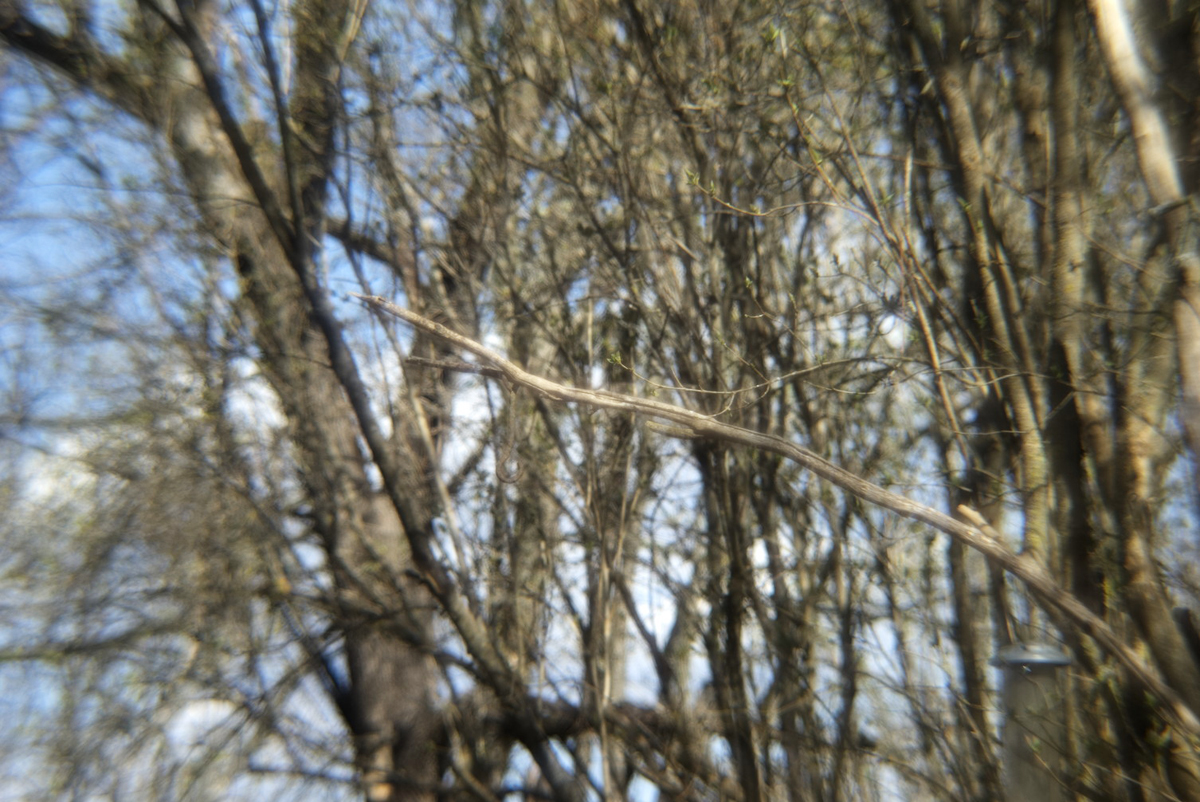
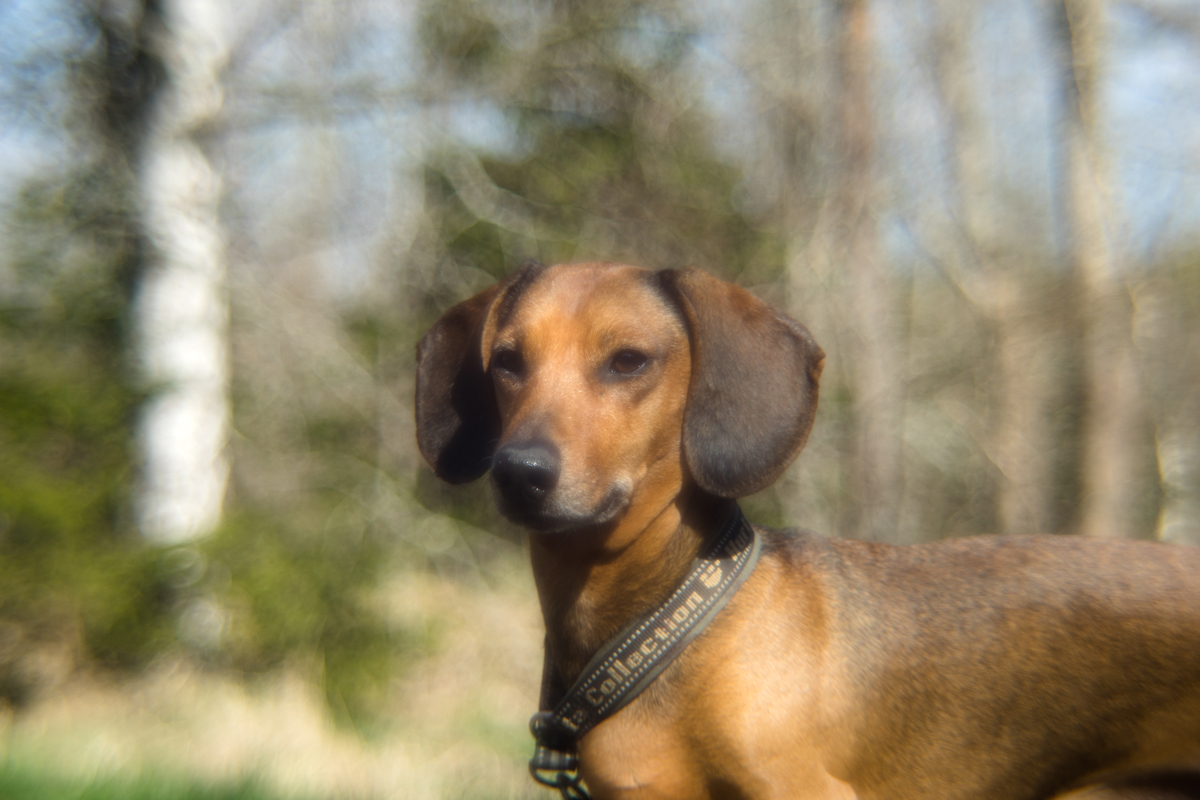
I remembered I got some test shots of the front half of a Auto Flex 55mm f1.7.
#1

#2

#3
 |
|
| Volver arriba |
|
|
Gerald

Registrado: 25 Mar 2014
Mensajes: 1292
Ubicación: Brazil
|
Publicado: Sáb Abr 22, 2023 6:16 pm Asunto: Re: FF Zoom to Medium Format Prime Conversion |
|
Publicado: Sáb Abr 22, 2023 6:16 pm Asunto: Re: FF Zoom to Medium Format Prime Conversion |
|
|
Gerald wrote:
| Pancolart escribió: |
FF Zoom to Medium Format Prime Conversion
No, i don't have a recipe but i know some of you study and understand lens designs thus asking:
would it be possible? Which elements to remove? |
When a lens is said to be "corrected," that means the lens designer tried to mutually cancel the aberrations of the individual elements so that the final resultant aberration is zero. In practice, however, some residual aberration always remains.
The figure below shows in a real example the final aberration (Sum) and the contributions of each of the 13 surfaces of a Double-Gauss 50mm F1.4 lens. The Seidel coefficients are presented for each of the 5 monochromatic aberrations: Spherical, Coma, Astigmatism, Petzval Sum (field curvature) and Distortion.

From the figure above, you can see how the aberrations introduced by each optical surface can be much larger than the overall lens aberrations. Thus, it is easy to understand that it is enough to remove a single optical element to destroy the delicate balance of aberrations. Often, simply changing the spacing between elements by just a few tenths of a millimeter can make the final aberration unacceptable.
_________________
If raindrops were perfect lenses, the rainbow did not exist. |
|
| Volver arriba |
|
|
|
|
|
No puedes publicar temas nuevos en este foro
No puedes responder a temas en este foro
No puedes editar tus mensajes en este foro
No puedes borrar tus mensajes en este foro
No puedes votar en las encuestas de este foro
|
 Español
 中文
 Magyar
 Русский
 Deutsch
 日本語
 Français